Home     Events     Store     The Center     The Founders     Gallery     News     Contact Us     Join Us

Ancient Egyptian Wisdom ... Daily Practice

Sunday, May 2, 2010

King Tut Unwrapped: A Critique

In November 1922, English archaeologist and Egyptologist Howard Carter discovered the tomb of King Tutankhamun. Since the discovery much information about Tut’s life has been a mystery. In February this year previously unknown information about Tut was unveiled which culminated with a two part program that aired on The Discovery Channel. While the discoveries presented were quite enlightening, much of it is still questionable while additional information is desirable.

The program had several objectives including establishing who were the parents and grand parents of Tutankhamun, identifying the cause of his death, and providing new details on his reign. Overseeing this production was Zahi Hawass, the Secretary General of the Egyptian Supreme Council of Antiquities. To ascertain all the desired information Zahi and his team investigated various tombs in the Valley of the Kings and the Valley of the Queens. Two to four DNA samples were taken from several mummies, Tut being the first of them. By matching several DNA markers, the researchers were able identify Amenhotep III and Queen Tiye as Tut’s grandparents, and an unidentified mummy as Akhenaton who they also confirmed as Tut’s father. A third mummy was identified as his mother but her name still remained anonymous.

Further DNA analysis also identified genes specific to malaria parasites in Tutankhamun and three other mummies. The research team “infer(ed) that Tut suffered from a vascular bone necrosis, a condition in which poor blood supply weakens or destroys an area of bone, plus malaria.” CT scans of the mummies also concluded that Tut’s royal family didn’t suffer from a hormonal disease which gave them a feminine or androgynous appearance. This idea was assumed due to the depictions of the family in art from their time period.

While these discoveries are a welcomed bit of education, many issues still weren’t addressed in the investigation. For one, the ethnicity of the mummies was never addressed. There DNA studies revealed so much vital information about the Tut family, however, their racial make up was left out of the picture. It is indisputable and irrefutable that the ancient Kemites were indigenous African people. However, throughout the program several reenactments of the Tut family and other Kemites were portrayed by people of Arab descent. At certain points in the program while Zahi is investigating the tombs, the drawings on the walls around him clearly depict the people of the land as being African.

Now, there are several ways to prove that the ancient Kemites were African people. For one all the major golden ages of dynastic Kemet were initiated by kings who originated from the south in Upper Kemet closer to Nubia. There is no way for one to argue that Arabic people originated in the South of Kemet, closer to the heartland of Africa. Another way to prove the ethnicity of the Kemites is to collect as many pictures of all the rulers of the four golden ages, and sit them and their family members side by side. It will be clear to the eye that these people depict the phenotypical traits of African people. A third way to prove the race of the Kemites is to show that there is a cultural, political, linguistic and spiritual unity between it and all other kingdoms in Africa. The combination of these three points and others prove beyond a shadow of a doubt, the ethnicity of the Kemites.

Furthermore, Arabic people didn’t gain control of Kemet until 651 A.C.E. when they invaded the land. It was then that the cultural and racial make-up of Kemet changed. This era ushered in an influx of Arabic people from Southwestern Asia. It is thus quite baffling that Zahi Hawass and the producers of his program did not present the ancient Kemites as African people. However, this is what happens when a people don’t know their history or lack the means to present it to the masses. Noam Chomsky says, “He who controls the media controls the minds of the public.”

From this assertion we can understand how devastating it is for African people to not be identified as the creators of one of the greatest civilizations in history. Without the world universally recognizing Kemet as an African nation creates a negative perception of African people and a misinterpretation of the culture. Many Egyptologists from other cultures in studying ancient Kemet come to wrongful conclusions about various aspects of the nation. One example of this is the assumption stated earlier that the Tut family had an androgynous appearance. Individuals who are truly knowledgeable of the culture understand that such depictions were purely symbolic. This bit of information I learned myself from attending guided tours of Kemetic exhibits with the Center for the Restoration of Ma’at at the Brooklyn Museum and The Metropolitan Museum here in New York City.

Jabari Osaze (DjedenMa'at Aten-Ra) and the late Dr. Asa G. Hilliard both do impressive jobs of explaining symbolism in Kemetic culture. The writing and art of this civilization is purely metaphorical and convey messages and lessons for the people of the land to learn from. If one conducts a study of Akhenaton and his reform of Kemet’s spiritual system, it will be easy to understand how his philosophy influenced the art at that time and what message he was trying to convey.

It is therefore essential that the rightful owners of Kemet’s legacy reclaim it so they may properly present it to the world. The Center for the Restoration of Ma’at is committed to this effort. The Center will conduct at least two tours of the Tutankhamun Exhibit currently at New York City's Discovery Time Square Exposition in order to provide an African centered explanation of who Tutankhamun was and the mystery surrounding his death. In closing I will state an ancient Kemetic proverb, “To know means to record in one's memory; but to understand means to blend with the thing and to assimilate it with oneself.” Thank you for reading.

Sources:

Begley: King Tut's DNA Reveals a More Manly Pharaoh: http://blog.newsweek.com/blogs/thehumancondition/archive/2010/02/16/begley-king-tut-s-dna-reveals-a-more-manly-pharaoh.aspx

The Master Keys to the Study of Ancient Kemet: http://www.cwo.com/~lucumi/kemet.html

Kemetic Chronology: A Summary: http://www.cwo.com/~lucumi/Baffour-chart.pdf

Sunday, April 25, 2010

HAITI: MOTHER OF AFRICAN LIBERATION

Haiti is hurting. Haiti has been hurting for a long, long time. The 7.0 magnitude earthquake which devastated the nation in January this year has consequently brought its suffering to the attention of mainstream media. For a long time Haiti has repeatedly been referred to as the poorest country in the Western hemisphere. Its deplorable social and economic climate has sparked much dialogue and has been sensationalized all over the world. However, mainstream media has failed to articulate the circumstances which brought Haiti to its current state.

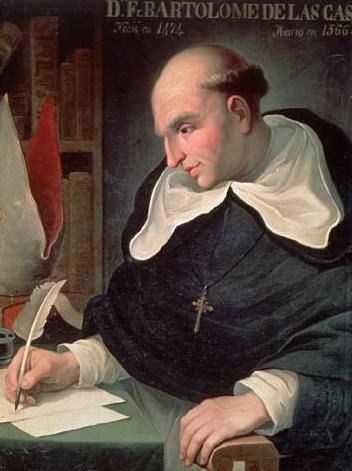
To understand why so many brothers and sisters are suffering in this nation we have to look back in history at the Genesis of it all. This is Spain’s conquest of the island of Hispaniola at the hands of Christopher Columbus. The Taino people who originally inhabited the island were being annihilated by the Spanish. To their rescue came the Spanish priest Bartolome De Las Casas. He was educated at the University of Salamanca in the field of law and years after completing his studies he took up Holy Orders of the Catholic Church and migrated to Hispaniola . There he was given some of the best land along with Taino labor for the purpose of agriculture and mining.

Las Casas later changed his heart in regards to the punishment perpetrated against the Tainos. He gave up his lands and became the “apostle” of the natives. He worked to have laws passed to preserve their lives but was defeated by the greed of Spaniards who felt they “had come to take their gold, not civilize the aborigines.” To spare the natives from suffering further atrocities, Las Casas agreed to sacrifice the well-being of African people. At the suggestion of Dominican monks he consented to the importation of African slaves, “as the labor of one negro was more valuable than that of four Indians, every effort should be made to bring Hispaniola many negroes from Guinea .” This rationalization became justification for what eventually led to Europe’s African slave trade.

The Spanish however, did not immediately turn to African labor. They first implemented white labor in the form of convicts, white slaves and foreign immigrant labor. Since this did not meet their ultimate need, the African slave trade was initiated in September 3, 1501 by the king of Spain . When Las Casas saw that the Africans suffered the same fate and died in the same fashion as the Tainos, he felt remorse and realized that it was the brutality of the Spanish which is to blame for the premature death of the people.

Flash forward to the 17th century and at this time the French have established settlements on the western side of the island. The Spanish later concede the western third of the island to the French in 1697 and it becomes known as Haiti . The colony goes on to generate immense wealth for the French empire while the Africans who performed the labor are subject to inhumane brutality. This all comes to an end with the Haitian Revolution lead by Toussaint L’Ouverture. In 1804 Haiti became the first black republic to declare independence after defeating the French army and fighting off a subsequent British invasion.

The French had hopes of reacquiring Haiti but gave up such thoughts and all claims to the former colony with an agreement for the payment of 150 million Francs in gold. The funds were to cover damages and the loss of land due to the Haitian revolution. This debt was forced on Haiti by the French through the taxation of shipping imports and exports. To payoff this debt Haiti had to acquire loans from the U.S., Germany and France which only exacerbated the situation. The original debt to France was eventually paid off in 1947 but by that time the nation was financially crippled. This resulted in additional loans being taken out under corrupt Haitian dictators such as François Duvalier. These funds were misused and as a result the country is still indebted to the Inter-American Development Bank, the World Bank, the IMF, the U.S. and France.

To make matters worst, Haiti has been plagued by political instability and violence throughout its history. Between 1843 and 1915 the country experienced 22 changes in government. Since its independence several colonial powers aspired to gain control of Haiti for financial investment and because they felt the “negroes” of that nation were incapable of governing themselves. The nation has been subject to U.S. invasions and occupations in 1915-1934, 1994 and 2004. During these occupations U.S. citizens obtained rights to key wealth building resources in the country while native Haitians were left empty handed. They lost their lives in rebellions in the thousands and were exploited for free labor. Regime change at the hands of the U.S. was also an automatic outcome. At the end of each occupation the country was only left in worst shape than it was before the invasion.

The amalgamation of Haiti’s national debt, political imbalance, and foreign invasions leads to the nation’s problem of deforestation. The nation has insufficient capital and has been unable to fully develop its energy sector. In 2006 only 10% of a Haiti’s population received electricity while the rest are left to seek alternative sources of energy. For this they turned to wood and consequently cut down numerous trees throughout Haiti’s history. The country is currently 98% deforested and this promotes soil erosion which is exacerbated each time they are hit with a hurricane. The land is subsequently damaged affecting agriculture which means less food available to feed the overly populated country.

With so many problems plaguing the nation it is easy to see why it is in such a deplorable state. This is a nation so poor that people eat mud pies to survive. In addition to that, massive poverty leads to widespread violence and corruption. All of this is not by chance but engineered as history teaches us. Since its liberation, Haiti has been subjected to nothing but punishment by the world’s colonial powers. In a recent trip to Haiti, the historian Runoko Rashidi explained a conversation he had with a group of Haitian students. They asked him if the Haitian people were wrong for liberating themselves from the French. They had been subjected to so much punishment that they believed, possibly if they had remained enslaved for a longer time they would not be suffering so much today.

Haiti and other developing countries around the world only know of negative relationships with these imperial nations. Examples of this can be viewed in the documentary “Life & Debt” which details the exploitation of my native country of Jamaica by the US, IMF and World Bank. There is a case in the film where the undermining of Jamaica’s meat industry is discussed by a native. This person explains a situation where a local businessman thought it would be a good deal if he could purchase some chicken cheap, and they came up with the idea that they would import it from the US. After examining the shipment it was discovered that this chicken was about 20 years old!! This meat was determined to not be fit for human consumption. However, the person that provided the chicken tried to convince them that it only came to Jamaica accidentally, and that the shipment was in fact for Haiti and it should be released back into his custody so that he could send it on to the correct destination. Such business practices are shocking and sadly this is only a case of which we know.

With so much despair afflicting this nation, it is alarming to hear the reasons people give to explain its situation. Individuals such as Pat Robertson assert that the people of Haiti sold their souls to the devil to liberate themselves from the French and this is why they are suffering and being hit with so many natural disasters. Others declare that it’s their practice of voodoo and devil worship to explain their situation. All of these rationales are disturbing.

Their religion of Vodou is totally misunderstood by the Western world and only presented negatively by mainstream media in films such as “The Serpent and the Rainbow.” To truly understand this spiritual system one must engage in some sort of scholarship. The Haitian Vodou priest Houngan Aboudja provides great information about this religion in the article, “The Cultural Setting: Morality in Haitain Vodou.” This religion’s roots go back to the African kingdom of Dahomey which is modern day Benin and according to Dr. Ivan Van Sertima, in studying Vodou he realized it is more well preserved in Haiti than in its native land. It is monotheistic, communal and ever evolving in tradition.

Aboudja makes several important comments about Vodou. “Haitian Vodou is a religion that was born out of struggle and revolution, a religion of resistance that gives collective strength and identity to the disenfranchised………Through a complex set of myths and rituals, Vodou relates the life of the faithful to the spirits (called lwa) who govern that life. It instills in its devotees the need for good character and self-examination, and it uplifts the downtrodden who have experienced life’s misery and misfortune. It provides an explanation for death, which is treated as a spiritual transformation, a portal to the sacred world beyond, where productive and morally upright individuals, perceived by devotees to be powerful ancestral figures, can exercise significant influence over their progeny. ..... Here it is important to note that, what is meant by Vodou culture is not necessarily the same concept as the current social politic found in the country of Haiti today. In many ways, these two are in conflict and the current political climate, however corrupt, exists due to reasons having nothing to do with traditional spirituality and culture. No, it exists due to other forces, foreign and domestic, socio-economic and geo-political. It has nothing to do with those values prescribed by Vodou culture.”

With so many facts placed on the table, it is clear to see that Haiti’s suffering has nothing to do with its spiritual practices. It is all a result of politics and economics. It is important for all people of African dissent to recognize this fact. They also need to recognize the significance of the Haitian Revolution and what it represents. While there were numerous revolts occurring during slavery, Haiti’s liberation served as a great inspiration to all other Africans in bondage at the time. Their fight for freedom sent shockwaves over the world at the fact that this small nation of Africans were able to defeat the greatest army in the world. This monumental event was a huge turning point in the history of African bondage making slavery ever more expensive for the colonial powers and instigating the abolitionist movement. However, it must be noted that abolitionists were first hired by imperialists solely for economic reasons and not out of guilt or a new development of morality. They were just transitioning from direct slavery to its more advanced form which is colonialism.

Nevertheless, all Africans are indebted to Haiti for the role it has played in our liberation, for it is the starting point of our march to freedom. It is therefore essential that we all come to the aid of this nation, especially in its time of need. As it can be said that Africa is the mother of humanity and civilization, it can be said that Haiti is the mother of African liberation. Thanks for reading.

Sources:

Williams, Eric. 1970, “From Columbus to Castro: The History of the Caribbean,” New York, Random House, Inc.


“Haiti: The Land Where Children Eat Mud. The Times Online, The UK Edition -

http://www.timesonline.co.uk/tol/news/world/us_and_americas/article6281614.ece?token=null&offset=0&page=1


CIA World Factbook - https://www.cia.gov/library/publications/the-world-factbook/geos/ha.html


“Why America Invaded Haiti: Wilson Sends in the Marines,” Associated Content -http://www.associatedcontent.com/article/904437/why_america_invaded_haiti_wilson_sends.html


“Deforestation in Haiti” - http://www1.american.edu/ted/ice/haitidef.htm

“Haiti’s Poverty is Directly Linked to Deforestation and Habitat Loss” - http://redgreenandblue.org/2009/05/10/haitis-poverty-is-directly-linked-to-deforestation-and-habitat-loss/


“The Cultural Setting: Morality in Haitian Vodou” - http://africawithin.com/religion/cultural_setting.htm


“More About Haitian Vodou” - http://www.erzulies.com/site/articles/view/6


Wednesday, April 21, 2010

We're Back! Welcome Our New Contributer: Xavier Williams!

Folks I know we've been neglecting The Udjat in recent weeks. 1 week turned into 2 ... 2 weeks into 4 weeks. I think you get the drift. We turned around the other day and noticed that our last post was 5 months ago. Trust me, this reality was difficult for us to take. The Udjat is very important to us, but we've spent most of our time getting our television show, Kemetic Legacy Today, off the ground. Now that we are in the middle of our second season and things are running smoothly, it's time for our blog to rise from the ashes like the great bennu (phoenix) bird!

You might ask why return to The Udjat after building a successful television program. Wouldn't the show reach a larger audience? Sure it would. However The Udjat allows us to do something very unique. These posts allow us to keep our readers abreast of the latest news on Ancient Kemet. They also allow us to provide commentary on our contemporary society from the perspectives of our Ancient African, Ancient Kemetic ancestors. The Udjat allows us to truly lead the movement to restore Ma'at!

We are pleased to be able to have a new contributor, Xavier Williams, assist us with providing our readers with material. Xavier is an incredible brother, virtually a model for what African men can be despite all that has plagued us. He is well-educated, but grounded; assertive, but respectful. He has tirelessly worked to develop his understanding of our conditions through diligent study. A voracious reader and eternal student, Xavier is primed to lead an intelligent movement of people of African descent to return to our historical greatness. We are fortunate to have him. Please give him a warm welcome. Brother Xavier's brief biography follows below. Shem em Hetep (Go Forth in Peace)!


Xavier Williams: A Biography
Xavier has an undying love for his pen. His passion for writing was sparked in his late teenage years by teachers who provided him fundamental tools to intelligently articulate his thoughts on paper. He was also heavily influenced by the poetry of many great Hip Hop artists of the late eighties and early nineties. He began writing rap lyrics and poetry and as he entered his adult years he included essay writing into his portfolio of work. He aspires to be a scribe of the highest order and looks at each piece as an opportunity to perfect his craft. His poetry in particular is a fusion of the rhyme patterns found in Rap music and the mechanics of traditional poetry. He has been writing for over 10 years and has composed numerous poems and essays covering social issues, he aims to use his art as a means of provoking thought and positive influencing the world.

Xavier was educated at Bernard Baruch College's Zicklin School of Business, where he obtained a BBA degree with a concentration in human resources management and a minor in English. However his second and most important education began when he watched a interviews of the great African scholars Dr. Ivan Van Sertima, Dr. Yosef Ben-Jochannan, and Dr. John Henrik Clarke on Gil Noble's "Like It Is". Amazed at the information these men shared about ancient Africa, Xavier developed an unquenchable thirst and hunger to learn everything he could about African history. Consequently, he read the works of these scholars and others including John G. Jackson, Chancellor Williams, Runoko Rashidi, George G.M. James, Walter Rodney, Eric Williams, and Anthony T. Browder.

Xavier recently completed Runoko Rashidi's online course on the Global African Presence and Classical African Civilizations. This year he joined the African Genesis Institute and will sojourn to Kemet as part of the 2012 class.

He currently works for The Associated Press as the Senior HR Administrator where he is involved in recruitment of full-time staff and summer interns along with various aspects of training, development, and diversity. He is excited about this opportunity to contribute to The Udjat and hopes his work will be both informative and inspiring.

Tuesday, November 10, 2009

The Udjat Recieves Blogged.com's Top Ranking!

I think every blogger in the world is always looking to reach a larger audience. With the amount of time that we spend on each post, we sometimes wonder whether anyone out there in cyberspace is actually reading. When I found Blogged.com, I was excited to submit The Udjat. Blogged is not only a comprehensive directory of blogs in a wide variety of categories, but it also serves as a grand review of blogs. I really hoped that The Udjat would be viewed favorably.


Much to my surprise, The Udjat has recieved the top ranking in the Religion and Spirituality (out of 1,785 sites) and African American (out of 3,701 sites) categories. The Udjat recieved the "excellent" rating and a score of 9.3 out of 10. Are you reading regularly? With all of the areas that the Center for the Restoration of Ma'at is entering, we'll have so much more to offer. You'll be in for an interesting ride! Shem em Hetep (Go forth in peace)!

Tuesday, November 3, 2009

Chris Rock's Good Hair is Masterful ... But

This weekend Nfr-Ka Ma'at and myself took in Chris Rock's documentary, Good Hair. The film was inspired by an awkward conversation between Rock and his eldest daughter Lola. She asked her father, "Daddy, why don't I have good hair?" His comprehensive response is a full-length movie in which he takes an in-depth look at the $9 billion black hair care industry. He is able to skillfully balance the film's humor with the very serious topic of the "ritualistic" straightening of African American hair.

Rock interviews a large number of well-known African American celebrities including Nia Long, Maya Angelou, Salt-n-Pepa, Raven-Symoné, Paul Mooney, Ice-T, and even Reverend Al Sharpton. They describe their own reflections on hair straightening and even some of their tragic accidents. We can always count on legendary comedian Paul Mooney to give us insightful and hilarious analysis of contemporary events. He wears a large afro-wig atop his bald head when he states, "When your hair is relaxed, white people are relaxed. When your hair is nappy, white people aren't happy."

Rock also focuses on the largest annual Black hair care event in the world, the Bronner Bros.' International Hair Show in Atlanta. The show features hundreds of vendors with thousands of hair care products. The event is also an adequate display of the disturbing fact that Black folks only own or control a small percentage of these businesses. Large white corporations often control much smaller units which produce many Black hair products ... just take a look at the dozens of ads in a monthly issue of Essence magazine. Many who are familiar with the challenges of "under-resourced" communities to obtain the experience, skills, and capital to compete might not be surprised by this reality. However, only people who frequent their local Black hair product supplier would recognized which community has the next largest stake in this business. Asians, mostly Koreans, also own large lucrative interests in Black hair care. Imagine going into a community predominantly occupied by an ethnicity other than your own and opening stores selling products that you don't, and will never, use. The controlling presence of both whites and Asians in the Black hair care market should be embarrassing.

Most Black women who wear straight hair styles probably know that most of the naturally straight hair that is used in extensions and weaves comes from India. Rock takes an extremely rare look at the Indian city where much of the hair comes from. Local hair traders purchase the hair from Hindu temples where worshipers, considering their hair a vanity, tonsure (shave) their heads in devotion to their god. Most of these worshippers are not aware that their hair ends up on the high-end of a million-billion dollar market on the other side of the world. Rock believes that they probably wouldn't care. "You've got to realize, we care about money more than anyone else. You tell them, "Hey, people are spending a lot of money in America for your hair," and they're, "So? I dedicate this hair to the god, so whatever happens, happens."

Rock also speaks with a scientist who demonstrates how sodium hydroxide—the active chemical in hair relaxer—can completely dissolve an aluminum soda can. The scientist is completely surprised when Rock explains that many parents apply the corrosive mixture directly to their young children's heads. Clearly this behavior can't simply be a "style" choice. After all, how we explain that a large majority of African American women (and even men) continue to use sodium hydroxide, euphemized "creamy crack", even though everyone has personal stories about how dangerous it is. It has remained a major choice for over 150 years.

Yes, we all have our personal stories ... including me. I remember teasing my younger sister as my mother used a "hot comb" to "press" her hair. I was warned that I shouldn't have been fooling around while my mother was using such a dangerous devise. Unfortunately, my sister thought I was pretty funny too. As she shifted in her chair in order to stop laughing, the section of the hair that my mother was straightening was immediately burned away, leaving the entire lock dangling in my mother's hand. I can still remember the sound of the sizzle and my sister's sobbing. I've always felt guilty about harming my sister, but it didn't stop me from straightening my own hair as a high school freshman. I was an extremely confused 14-year-old who was thrust into a violently-racist environment at Xaverian High School in Bay Ridge, Brooklyn. On my first day, I was chased to the train by white students shouting "Go home, Nigger!" In the next few weeks, I would be called "nigger" or get serenaded with the Kentucky Fried Chicken jingle song on a daily basis. I even tripped over a watermelon which was rolled down the hallway after me one afternoon. As I asked my parents to "texturize" my hair, I think I was subconsciously rejecting a portion of myself. If you can't beat them, join them. Right?

While I think Chris Rock's Good Hair is a brilliant, must-see-documentary, I have to say that it was still incomplete. Rock doesn't even attempt to delve into the historic motivations of African American men and women who began straightening their hair immediately after the end of their enslavement in the United States. Even though he interviews the great-great granddaughter of Madame C.J. Walker, he doesn't even identify her. Maybe she could have properly described "colorism" during the post-enslavement period. Being "less Black" after slavery could easily mean better housing, a wider choice of romantic partners, access to elite social groups, better chances of college admittance, and so much more. Several historically black colleges were founded by white former slave-owners for their illicit off-spring. These anti-African feelings set deep roots within American culture. Just listen to people in the Black community talk about a new baby's "good hair". I'm sure many of you have heard it. Why isn't the hair that Africans were divinely ordained to receive just fine? The entire subject is still a touchy one in our community.

Ironically, our Ancient Egyptian ancestors felt very different about tightly-curled hair and dark skin. Chief deity Ausar (misnamed Osiris by the Greeks) was known as the "Lord or the Perfect Black" and was often depicted with jet-black skin. One of the first depictions of a male divine character, known as Anhur, was depicted with a Angela Davis-type afro. Kemetic men and women also wore wigs and even added extensions that were always made of tightly-curled hair.

Okay. Did you get that one?! While so many people of African descent today are using a wide variety of often dangerous procedures to remove all traces of African heritage from their hair, ancient Africans actually felt African hair was beautiful. How did we get so far away from loving ourselves? How long will it take us to shed the baggage of our enslavement? I say the first step is being honest with ourselves about the things within our culture which seem normal, but don't benefit us. We can no longer simply say we're just doing what everyone else does. It's time to have some difficult conversations. As long as our minds are in chains, we can never believe that we'll truly be free. What do you think? Please vote in our poll after watching the Good Hair trailer and a demonstration video on using a hot comb included below. Shem em Hetep (Go forth in peace)!


Survey Results


Related Sites:
Official Good Hair Website - http://www.goodhairmovie.net/
Excellent Blog Site on Natural Hair Review - http://khamitkinks.wordpress.com/2009/10/01/the-bad-news-about-good-hair/
Chris Rock Interview on Good Hair (Quote from this source) - http://www.thewrap.com/article/chris-rock-grilled-his-hair-raising-documentary-8367

Friday, October 30, 2009

New York's Metropolitan Museum of Art Returns Artifact to Egypt

Officials at New York's Metropolitan Museum of Art returned an artifact to the Egyptian government on Thursday. The red granite fragment was on loan to the museum from an unnamed private owner. As museum staff inspected the artifact, which has never been displayed on the premises, they realized that the fragment was the corner of the base of a shrine enclosure meant to contain the statue of a deity. The shrine was dedicated to Amun, the chief deity of Karnak (Ipet-Isut), by Amenemhat I.

Dorothea Arnold, the Chairman of the Museum's Egyptian Art Department recognized the piece, "For a long time, I puzzled about the object to which this fragment belonged. I finally pieced it together when I came across a photograph showing the Naos in Karnak which is missing a corner in an article by Luc Gabolde in the journal Egypt Afrique et Orient ... We decided that, in these circumstances, the appropriate thing to do was to alert the Egyptian authorities and to make arrangements with the owner so that we could return the fragment to Egypt." The MET purchased the granite block, which was acquired last October on the antiquities market, in order to repatriate it.

This was not the first time that the MET returned "ill-gotten" objects to Egypt. 8 years ago the museum returned a 19th dynasty relief displaying the head of a goddess. The item was recognized by a Dutch Egyptologist, who had studied a chapel dedicated to Seti I at Memphis (originally Men-Nefer). Similar to the latest repatriated relief, the Seti I relief was purchased by the museum to facilitate its return.

Most media outlets hailed the relief's return as a victory for Zahi Hawass, the very visible head of Egypt's Supreme Council of Antiquities. Hawass has lead a public battle to return many of Egypt's most noted artifacts on foreign soil, including the Rosetta Stone (British Museum) and the disputed bust of Queen Nefertiti (Neues Museum in Berlin). After refusing to return a golden burial mask of a noblewoman, Hawass cut ties with the Saint Louis Art Museum. He next lobbied France's Louvre to return 5 painted wall fragments. The Louve relented after Hawass cut ties with the museum by halting their excavations and cancelling a lecture by a former staff member. Hawass has still remained "chilly" to France's Minister of Culture after the return of the items.

Regular readers of The Udjat should know that I am certainly no fan of Zahi Hawass (read one of my posts on the topic here). He has worked diligently to deny the African origins of the Ancient Egyptians. I am also routinely annoyed by his obligatory inclusion in virtually any documentary by the History Channel on Kemet. He very seldom adds anything of value to the discussions. I must give Hawass credit, however, for his dogged commitment to the return of Egypt's ancient artifacts. I regularly ask who "owns" the artifacts and legacy of Kemet. While I don't think that the region's current Arabic inhabitants are this lofty civilization's heir, I do think that the wholesale rape of these historic treasures by foreign nations is a great tragedy. Our current fixation is on a slab of red granite from an important shrine. I'd like to know when we'll begin to discuss the "ownership" of mummies by these same museums. After all, these are actually human bodies; individuals who never thought they would ever be removed from their resting places. How would you feel if the body of a cherished uncle, or ever a grandparent was exhumed for public display. Do you think the Vatican (or any other Christian country) would allow the exhumation of the body of an early Pope? What's the difference? Who speak for Ancient Africans? Currently ... no one.

Okay. I think you've heard enough of my ranting. I'm sure you're probably thinking that without all of these artifacts in a variety of countries around the world, we would know much less about the early civilization that paved our way. That's probably true. However, I think I really want to hear much more honest public discourse about these facts. Public discourse which includes the descendants of these wonderful forbearers. Even though they are now among the most downtrodden inhabitants of the planet. Up you might race, you can accomplish what you will! Shem em Hetep (Go forth in peace)!


Related Articles:
LA Times - http://latimesblogs.latimes.com/culturemonster/2009/10/monster-mash-13.html
NY Times - http://www.nytimes.com/aponline/2009/10/27/world/AP-ML-Egypt-Met.html
MET Press Release (Dorthea Arnold Quotation)- http://www.metmuseum.org/press_room/full_release.asp?prid={768AF8B3-20A5-4EB6-820F-2DECCBC8854D}
Fragment Photo Credit - Egypt's Supreme Council of Antiquities/Associated Press

Wednesday, October 28, 2009

Ancient Egyptian Symbols the Basis of Washington, D.C. Design

This weekend I had the privilege of once again taking the Egypt on the Potomac tour of Washington, D.C. With groundbreaking historical research by the Founder of the Institute for Karmic Guidance, Tony Browder; the tour uncovers the esoteric Ancient Egyptian symbols embedded in the very design of our nation's capital.

I know what some of you are thinking. "So what? Some of the buildings in Washington, D.C. are designed with the world's most noted ancient civilization in mind. Everyone loves Ancient Egypt." Actually, Brother Browder's exhaustive research proves that the very design of the city utilizes Kemetic sacred science to attempt to harmoniously channel divine energy for sustenance of this nation. The entire city is a monument to Ancient African symbolism.

Our story begins with the first president, George Washington, announcing the creation of a permanent capital along the banks of the Potomac River on January 24, 1791. The plan called for a perfect diamond/square with straight 10-mile boundaries at 90 degree angles from land ceded from Virginia and Maryland. Washington charged Andrew Ellicott with surveying this "sacred" location with the help of Benjamin Banneker. Banneker's background is quite interesting. A free-born African, he seems to have been descended from the Dogon people of West Africa who are known for their long tradition of tracking the heavens (more on this in a later post). Banneker was a self-taught astronomer of the highest order and perhaps a genius. He was able to accurately predict solar and lunar eclipses which he published in 6-year almanacs. He was also reputed to have borrowed a watch from a traveling merchant and replicated each piece in wood. His working wooden watch was able to chime hourly, and continued to operate efficiently until long after his death.

Banneker and Ellicott collaborated to create a astrologically harmonious plan for the new capital. Banneker slept in a tent while charting solar and lunar movements for approximately 3 months. Ellicott visited him daily to assist with translating these movements into land surveys. These measurements were given to a Frenchman, Major Pierre L'Enfant, to create the actual street plan. However, due to his addiction to alcohol it is likely that L'Enfant was unable to complete his work. The plan was probably completed by Banneker.

Planning the capital city in its entirety prior to construction allowed for sacred masonic (read Ancient Egyptian) principals to be ensconced into the design. For example, 16th street was planned as the corridor which bisected the city into two equal halves and also marked the sun at its highest point in the sky (also known as Aten-Ra). This "corridor of light" also crosses into the most important building in the United States, The White House. Ever wonder why The White House has some many rooms in different primary colors? It is a symbolic "refractor" (prism) for spiritual energy. Ironically, these powerful masons used sacred African aesthetics to edify themselves at the same time they subjugated and enslaved our African ancestors.

This incredible tour includes major stops at the Meridian Hill Park, the Scottish Rite Temple, the House of the Temple (Scottish Rite headquarters), and the Library of Congress. The masonic buildings are included to elucidate some of the fundamental masonic principals which are culled from Ancient African sacred science. You don't want to miss this tour! I've included a short video of my experience below. Be sure to take a look at it. Brother Browder has done the kind of work with which the ancestors must be very pleased. For more information and scheduling, visit http://www.ikg-info.com/.

What's the bottom line? Know thyself, African! This nation's founding fathers signed the greatest monuments to their power with YOUR signature. I wonder what happens when we arise to claim ownership. Shem em Hetep (Go forth in Peace)!